Saint Clelia is the beautiful fruit of this land, which sprang up and grew swiftly and has never faded, for her life continues to bear fruit. Her daughters, the Minime Sisters of Our Lady of Sorrows, bear witness to the fact that love for the Lord never ends; on the contrary, it grows and multiplies over time.
Le Budrie
Throughout the Persiceto area, from Amola to San Matteo della Decima, from Lorenzatico to Zenerigolo, Poggio and Tivoli, all bear witness to how ancient, widespread and enduring the Christian presence is in our region. This Christian presence, in addition to churches, cemeteries and buildings that have welcomed and continue to welcome the faithful for religious services, has over the centuries given rise to works of charity and assistance for the needy (e.g. hospitals, confraternities) as well as to education and leisure facilities (youth clubs, schools, vocational training centres, theatres and sports grounds).
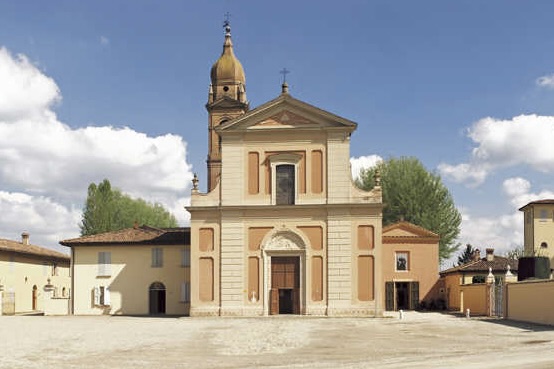
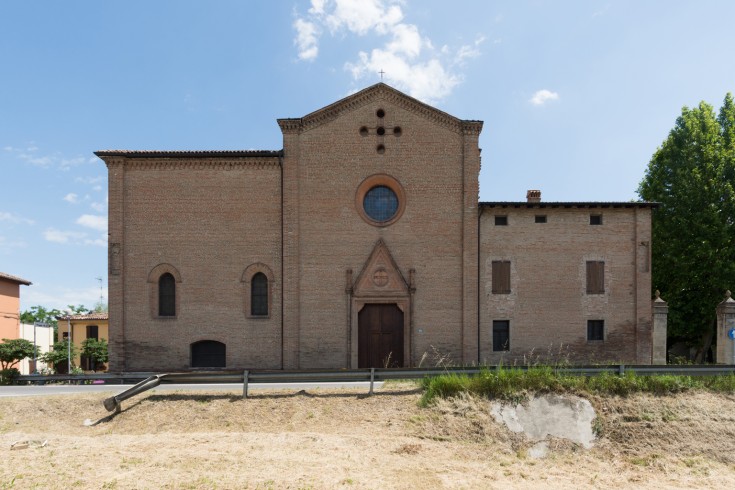
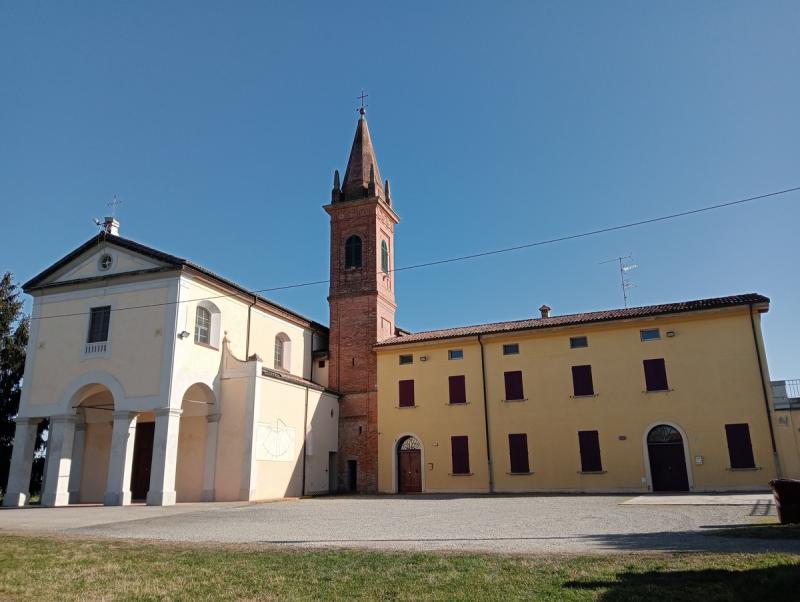
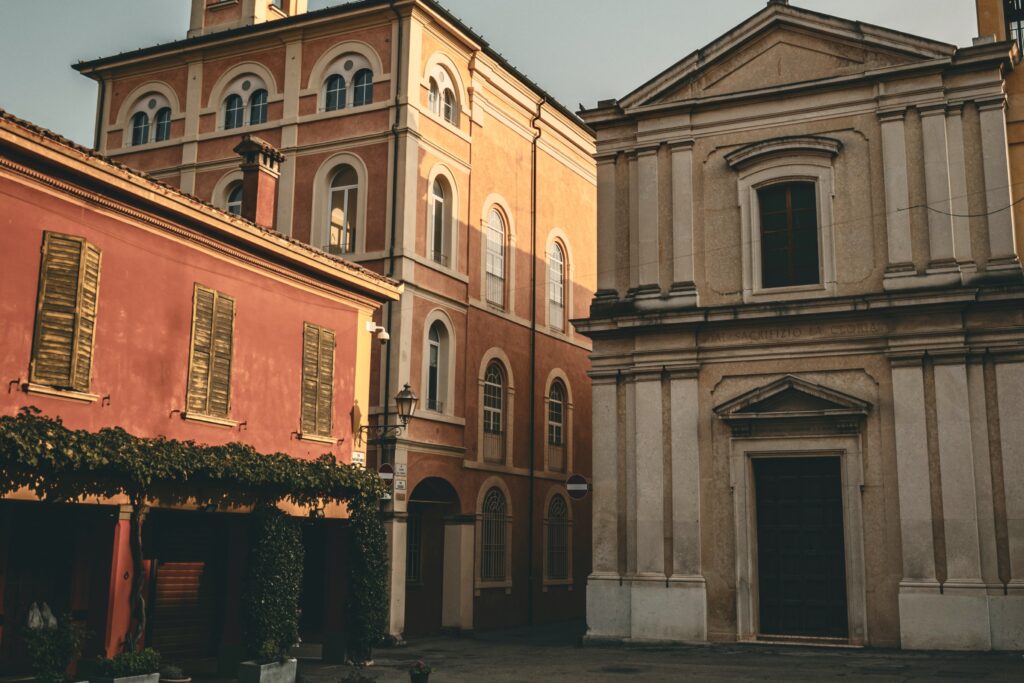
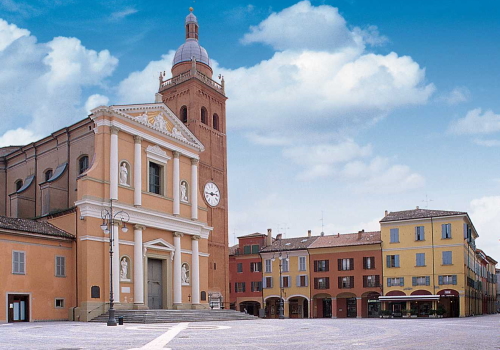
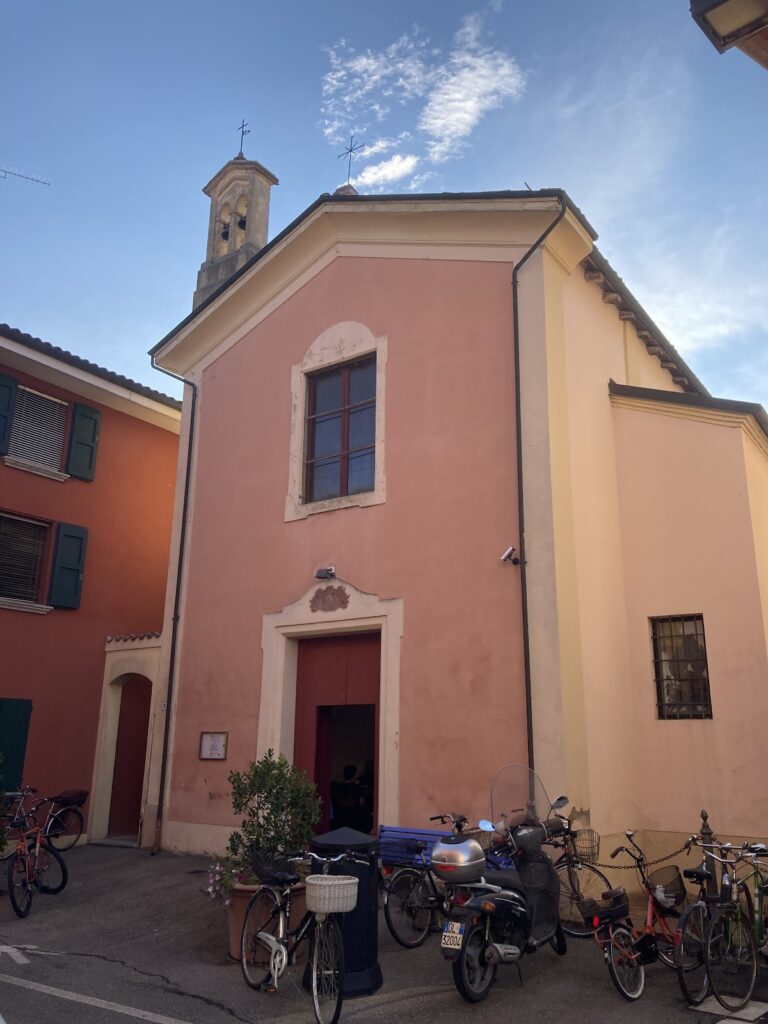
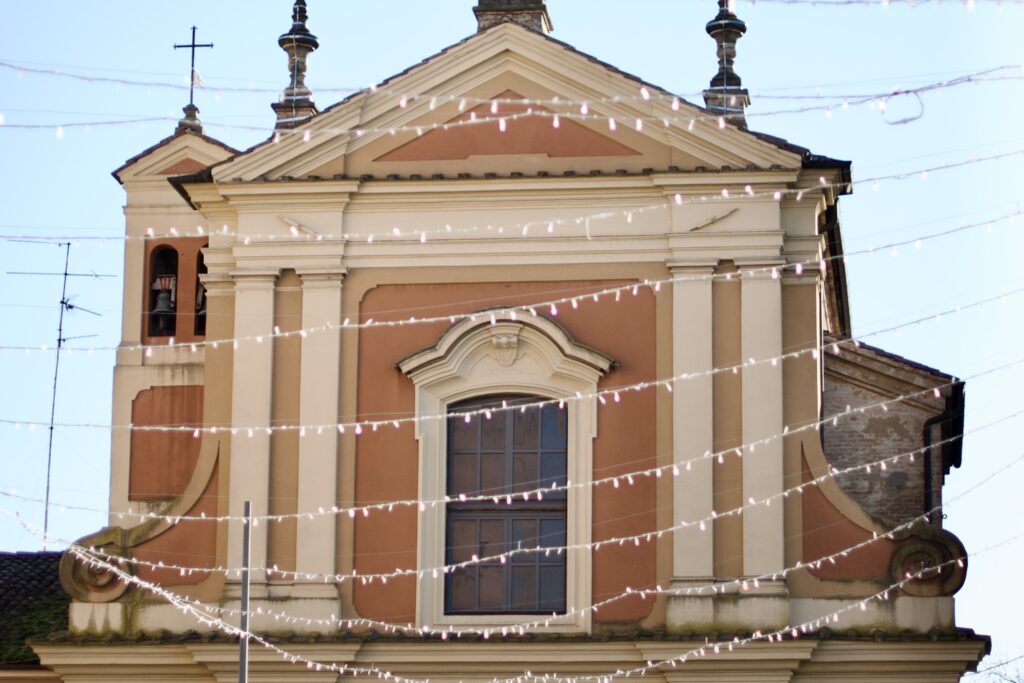
In Le Budrie, a hamlet to the south of the municipality of San Giovanni in Persiceto – which was formerly known as San Bartolo – stand the church of Santa Maria delle Grazie and the shrine of Santa Clelia Barbieri.
An ancient episcopal document dating from 1378 mentions the local church in the village of Budrie, which was then dedicated to Santa Maria delle Grazie, whilst another document from 1269, from Nonantola, mentions the church in the neighbouring village of Castagnolo.
In Budrie, therefore, there has been a parish church for centuries, dedicated to Santa Maria Annunziata; and, forming part of this complex, is the Sanctuary of Saint Clelia Barbieri, which also comprises the Oratory of Saint Joseph, where the saint’s remains are enshrined, the ‘maestro’s house’ and the mother house of the Sisters of the Sorrowful Mother.
The ancient parish church underwent numerous alterations over the centuries and, in particular, was radically extended and remodelled between 1905 and 1928, eventually taking on its present appearance. Next to the church, between 1676 and 1682, the bell tower was built to a design by the architects Canali and Barella; its dome was added only in the 19th century and was subsequently rebuilt in 1930.
The interior of the church consists of a single nave, with two side aisles forming a Latin cross, and features a high altar and six side altars. In the apse there is a painting of Saint Mary of the Annunciation, and on the first altar on the left as you enter there is a painting of the Death of Saint Joseph by an unidentified artist. On the second altar, also on the left, are the winning paintings from a competition held to depict Saint Clelia. In the centre is the winning painting, flanked by the sketches of the runners-up who took second and third place. The other altars feature niches housing statues of Saint Anthony, Our Lady of Lourdes, depictions of the Sacred Heart, and the Merciful Jesus as depicted by Saint Faustina Kowalska.
On 31 January 1993, the church was designated a ‘Diocesan Shrine’.
In the Oratory of St Joseph, which adjoins the church on the right and is connected to it, there is an urn containing the mortal remains of Saint Clelia Barbieri, born in 1847 and who died in 1869 at the age of just 23, after having spent a few years guiding a group of young women of her own age whom she had gathered at the ‘House of the Master‘ (which was already attended by the ’Workers of Christian Doctrine‘) to look after the children of mothers engaged in farm work, to help the poor and the sick, and to teach catechism to boys and girls.
That religious family, though small at first, was soon recognised by the Church as the congregation of the “Minime Sisters of Our Lady of Sorrows” and, as it grew, spread from many Italian towns and cities across the world, establishing centres in India, Tanzania and Brazil. Their main and primary work takes place in hospitals, nursery schools and schools.
Clelia Barbieri, who was first declared Blessed on 27 October 1968 by Pope Paul VI, was subsequently canonised by John Paul II on 9 April 1989. She has also been designated the patron saint of catechists.
Every year on 13 July, the day of his ascension to heaven (and also the day of his birth on earth), a celebration is held in his honour in the large open space behind the church, attended by thousands of people who gather from all over Italy.
The Oratory of St Joseph, built in the 17th century, subsequently altered on several occasions and restored in 1989, was consecrated to the saint by Cardinal Giacomo Biffi.
Clelia’s remains are held in an urn created by Cesarino Vincenzi: on either side are two angels by the sculptor Mauro Mazzali. On the back wall of the oratory, one can admire a depiction of the Death of Saint Joseph, a work (1626) by Vincenzo Spisanelli.
On leaving the oratory, on the left is the ‘Maestro’s house’, where the saint had retired with her companions and later passed away; and not far away is the mother house of the Congregation of the Minime Sisters of Our Lady of Sorrows.

A twenty-five-minute train journey from Bologna, eight kilometres from the Bologna-Modena motorway junction, on the Italian section of EuroVelo 7 for those arriving by bike.
San Giovanni in Persiceto station, Bologna–Verona line. Trains run every 30 minutes from Bologna Centrale; the journey takes 25 minutes.
A14 motorway, take the Borgo Panigale or Modena Nord exit, then the SS568. Free car parks near the city centre.
On the Ciclovia del Sole (EuroVelo 7), 25 kilometres from Bologna along the cycle path on the former railway line.
Save the attractions, plan your route, and follow the Cultural Metro lines.