"Virgin Mother, daughter of your Son, humble yet exalted above all creatures, the fulfilment of the eternal counsel, you are she who so ennobled human nature that its Maker did not disdain to become its creation (Dante, Paradise, Canto XXXIII)'
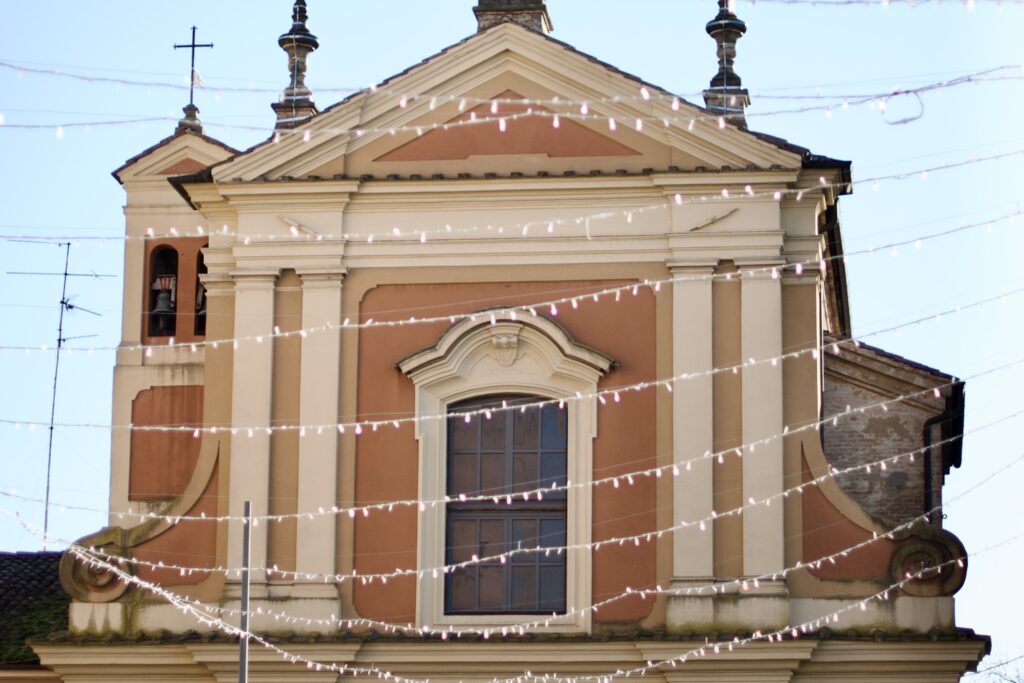
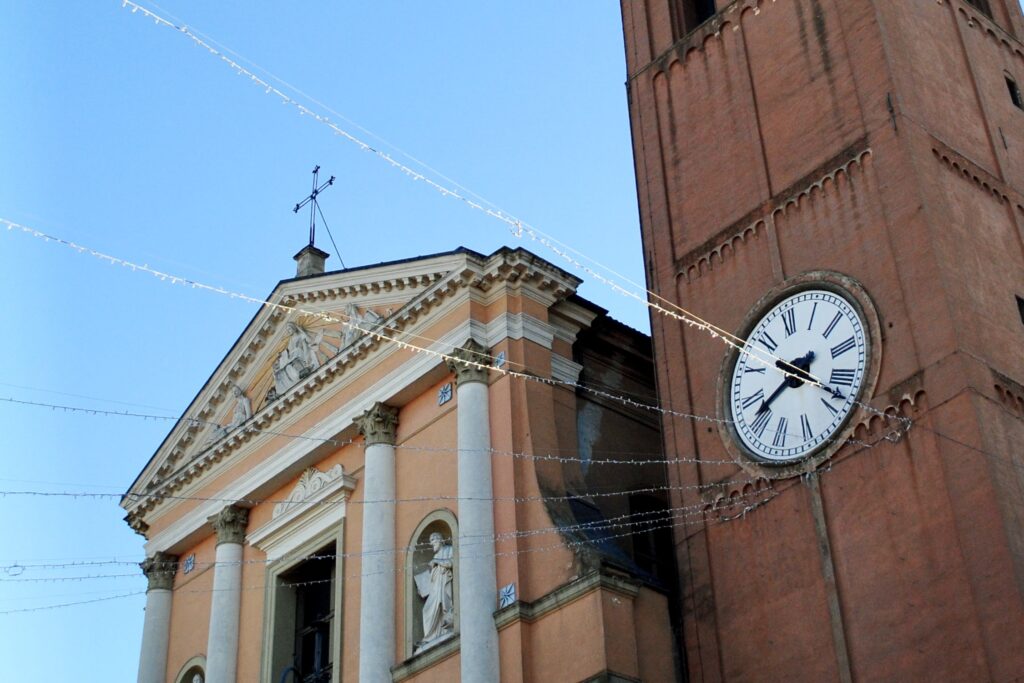
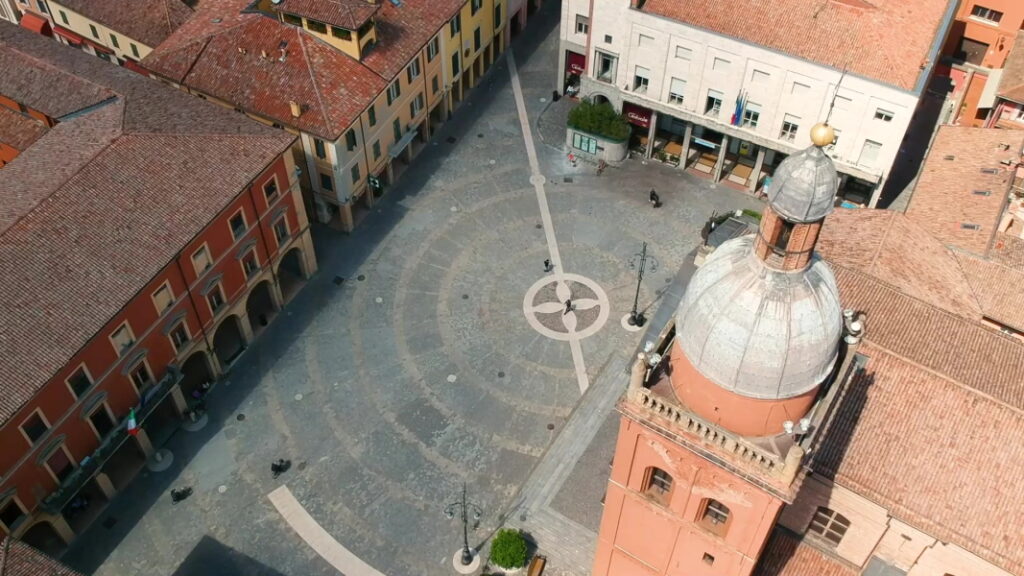
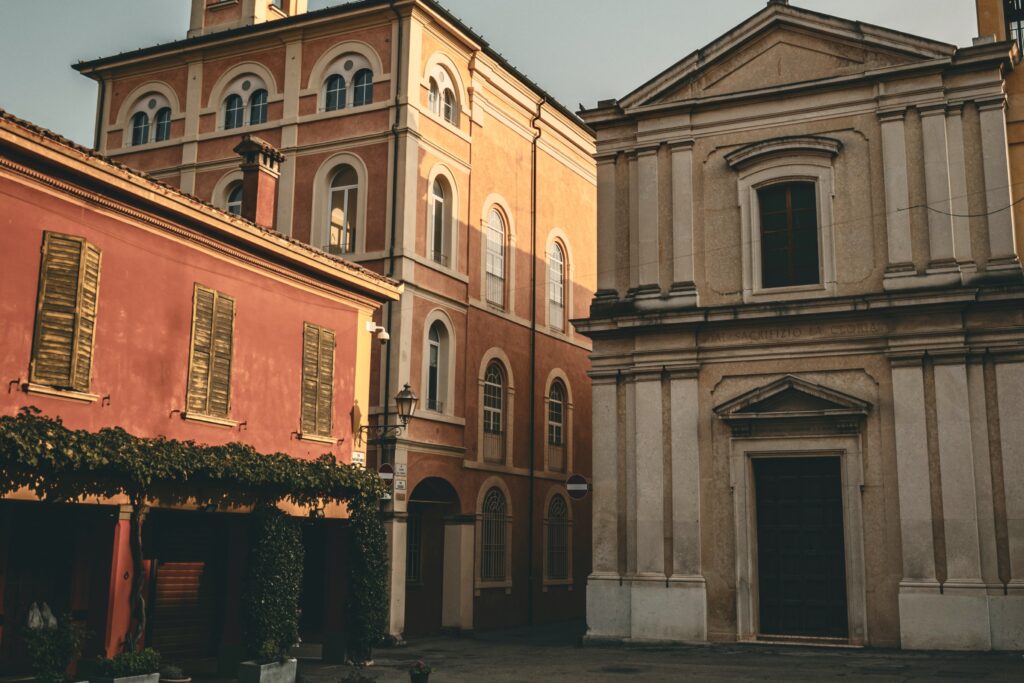
Piazza Garibaldi is a spacious square which, were it not for the historic nature of the buildings lining its eastern side, would still reveal its ancient role as a cattle market and town market, established close to the medieval fortress, which was dismantled in the second half of the 16th century.
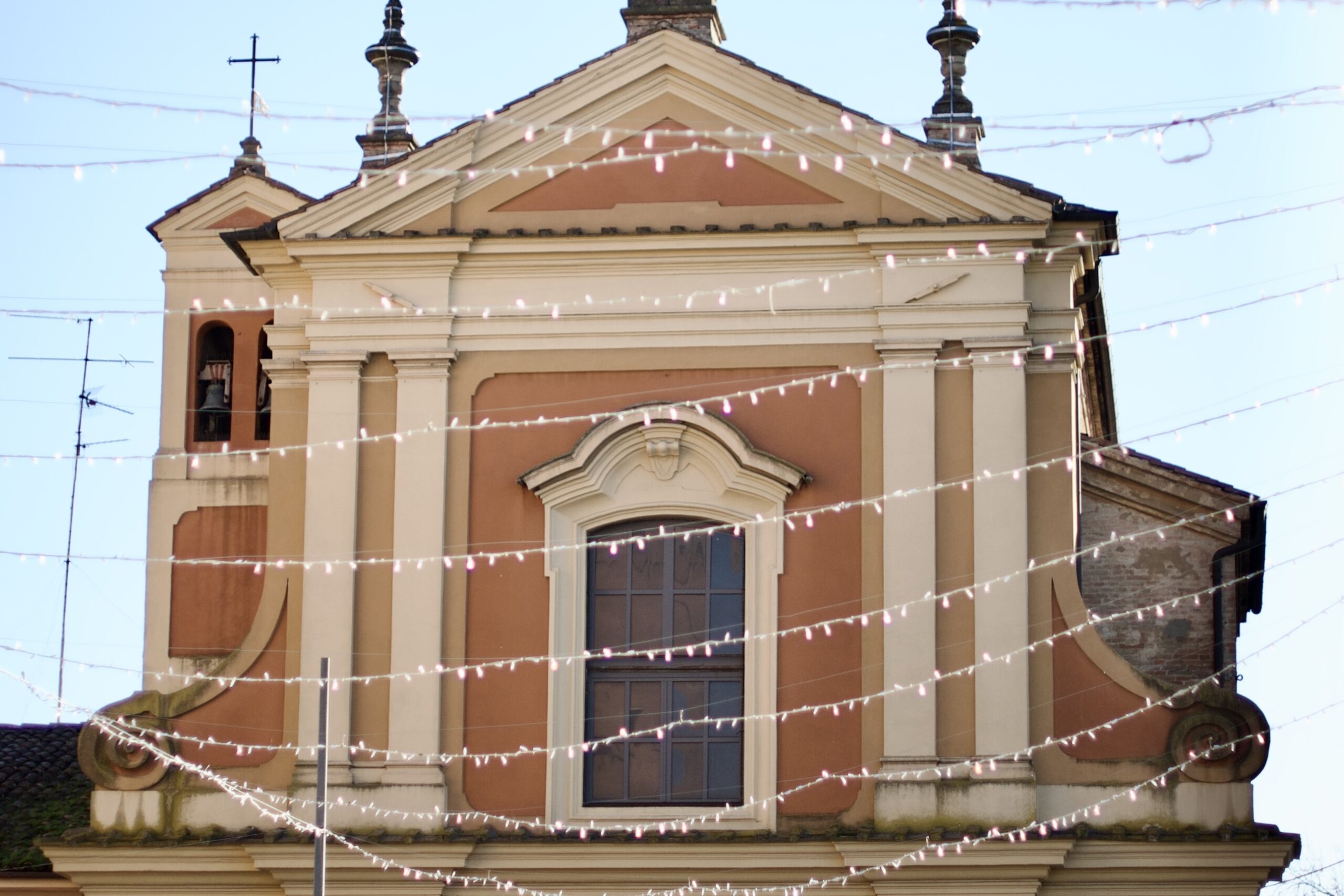
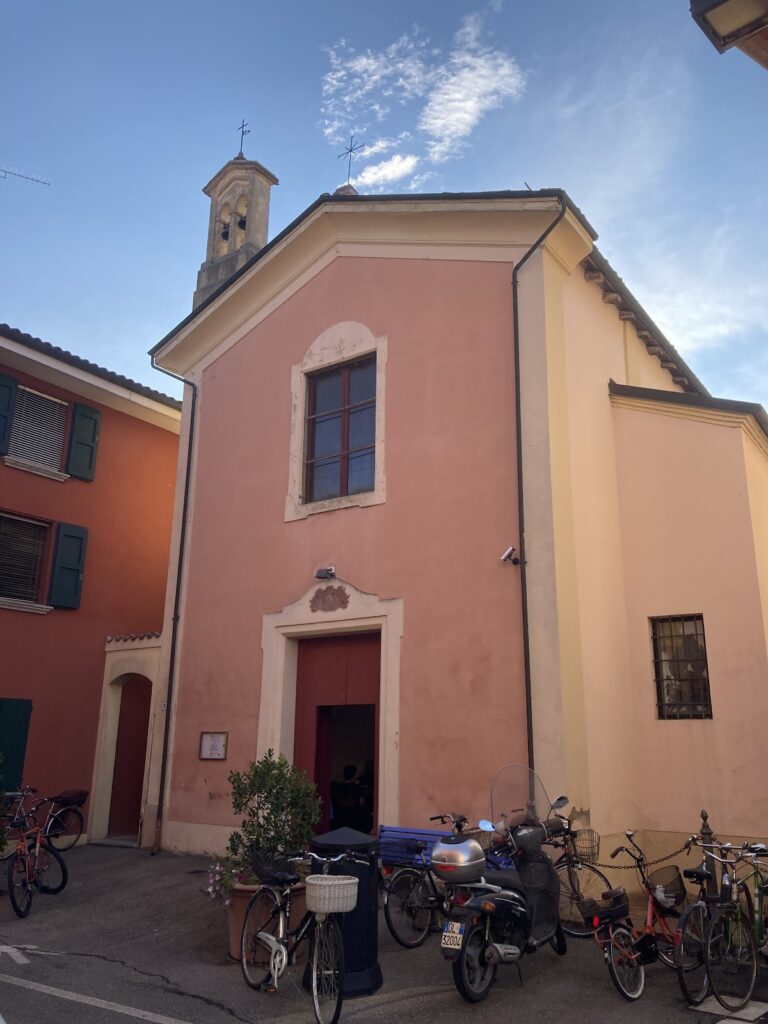
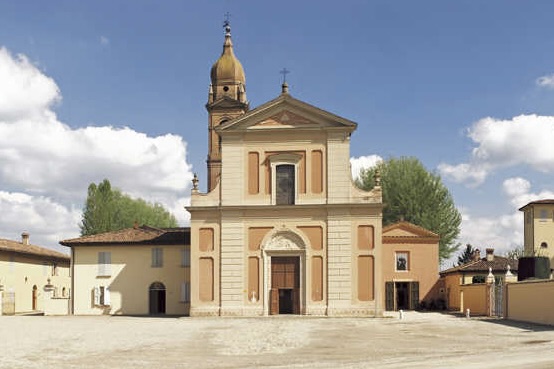
It was precisely towards the end of this century that the decision was taken to build a new church (1574), authorised three years later by the Archbishop of Bologna, Cardinal Gabriele Paleotti, with the almost simultaneous canonical establishment of the Society known as the ’Stretta dei Battuti della morte“, an ancient confraternity which oversaw its construction and took full possession of it in 1603 under the name ”Venerable Company of the Body of Christ“ or ”of the Most Holy Sacrament“.”
It was not until 1639 that the church welcomed the new confraternity of the ’Blessed Virgin of Consolation“, also known as ”della Cintura‘, a name which came to take precedence over the previous ones.
In 1712, a new oratory was built behind the church, whilst it was not until the 1660s that the two confraternities decided to provide themselves with a new and more prestigious place of worship, building it to a design by the famous Bolognese architect Alfonso Torreggiani, in the late Baroque-Classical style.
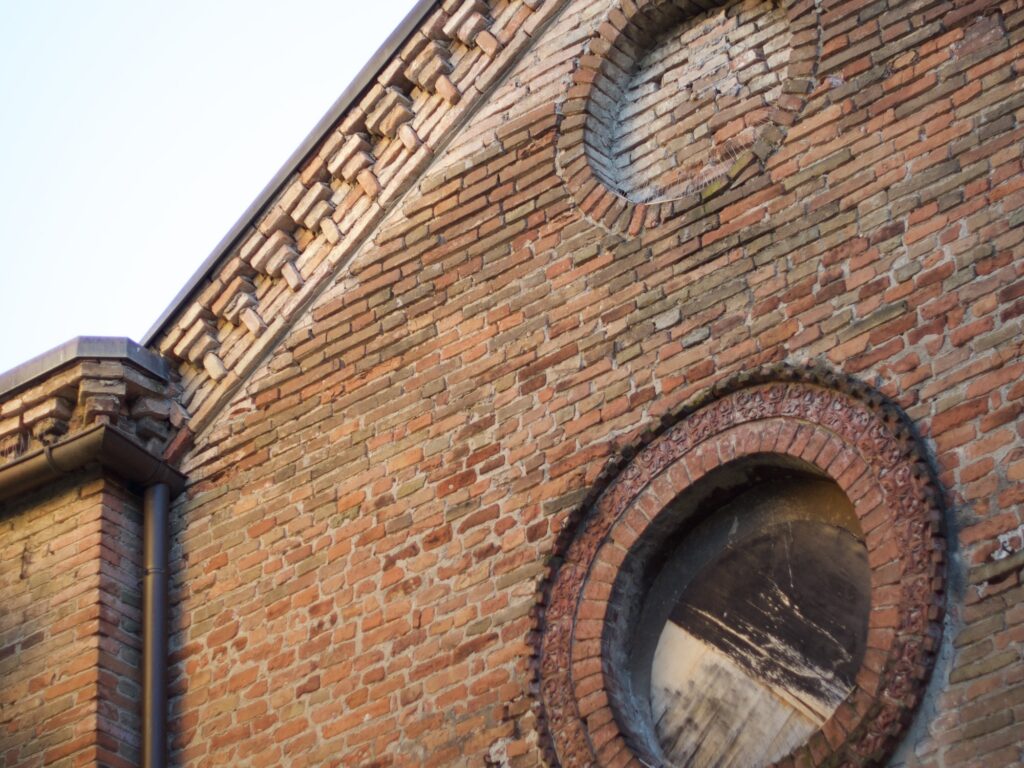
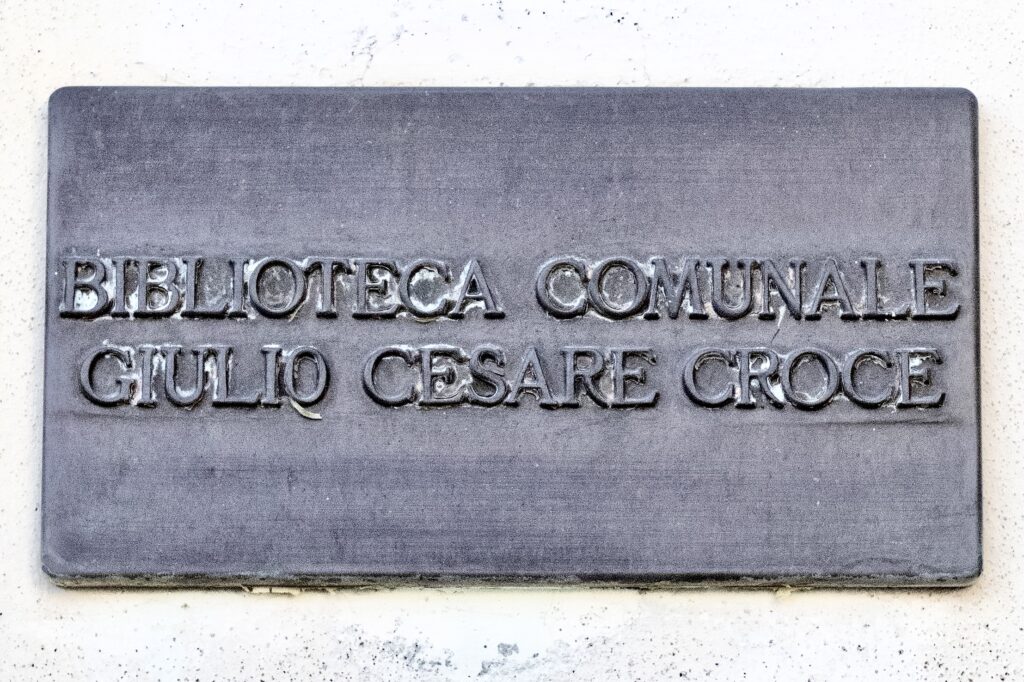
The latter – to which, since 1734, the new “Ospedale degli Infermi” (now the Municipal Library) has been attached, running parallel to the apse – has survived unchanged to the present day, including its single-nave interior layout, but was enriched between the end of the century and the 19th century with prestigious works, which visitors, should they happen upon one of the rare occasions when it is open, can admire, dominated in grandeur and artistic quality by the neoclassical high altar, the work of one of Bologna’s most highly regarded sculptors; Giacomo De Maria; the same artist who, twenty years later, also created the stucco sculpture of the Blessed Virgin of the Belt with Child, setting it within its altarpiece, ideally guarded by the two gigantic figures in the round of Moses and King David.
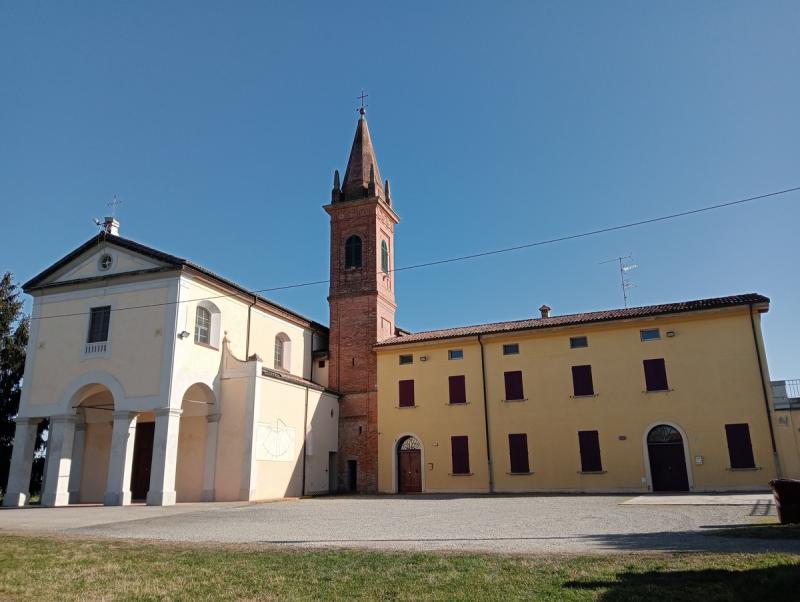
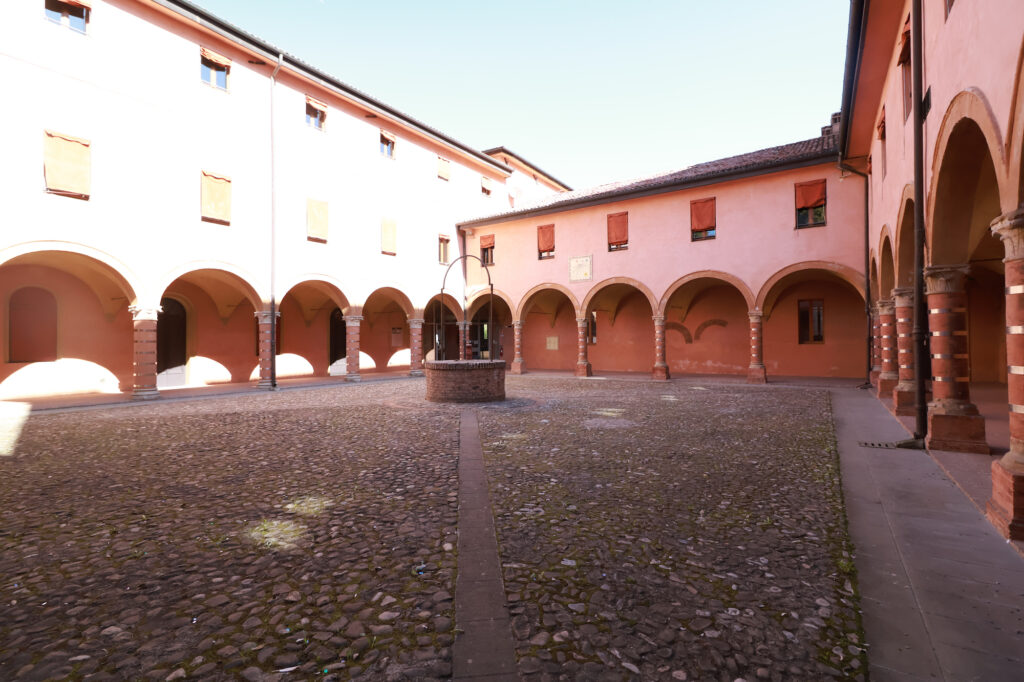
A twenty-five-minute train journey from Bologna, eight kilometres from the Bologna-Modena motorway junction, on the Italian section of EuroVelo 7 for those arriving by bike.
San Giovanni in Persiceto station, Bologna–Verona line. Trains run every 30 minutes from Bologna Centrale; the journey takes 25 minutes.
A14 motorway, take the Borgo Panigale or Modena Nord exit, then the SS568. Free car parks near the city centre.
On the Ciclovia del Sole (EuroVelo 7), 25 kilometres from Bologna along the cycle path on the former railway line.
Save the attractions, plan your route, and follow the Cultural Metro lines.