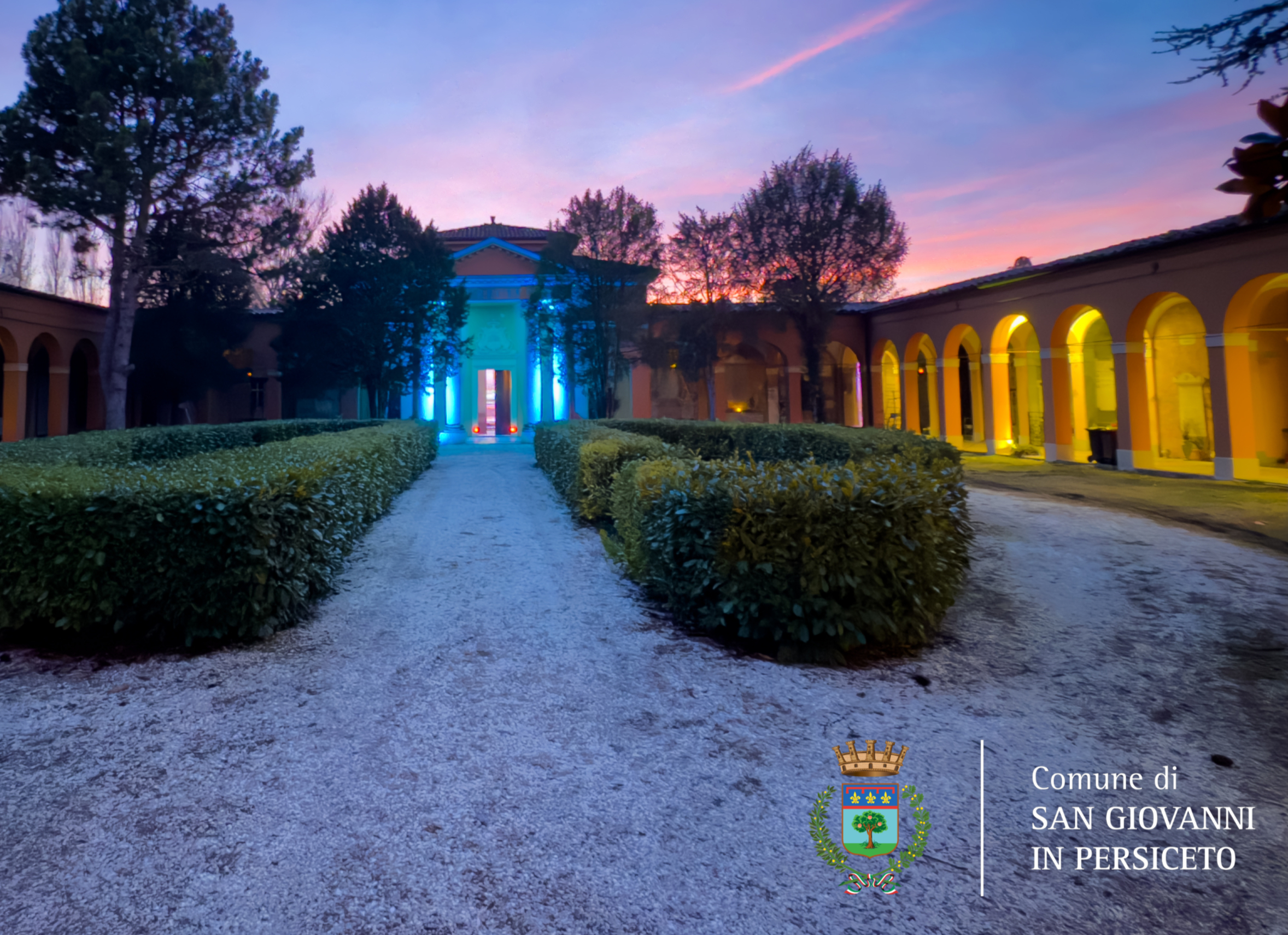
Now recognised as a Monumental Cemetery, the Persiceto Cemetery is a site of great historical and artistic value. Its neoclassical architecture, monumental tombs and sculptures by renowned artists tell the story of the evolution of Persiceto’s society through the centuries.
Towards the end of the 18th century, a site was identified on land belonging to the defunct Confraternity of Santa Maria della Scoppa as the location for a cemetery outside the town. Work began immediately on erecting an initial boundary wall, which appears to have been completed by the early 19th century. The centrepiece of the Monumental Cemetery is this first enclosure where, according to documents preserved in the municipal historical archive, “burial plots” were granted from 1817 onwards to both citizens and the clergy, on an equal basis. Notable among the monumental tombs are those of Canon Giuseppe Sassoli, Dionigio Masetti and the Lodini, Zecchi, Maccaferri and Sacchetti families. Several exquisite works from the Neoclassical period are by the Persiceta-born sculptor Vincenzo Testoni.
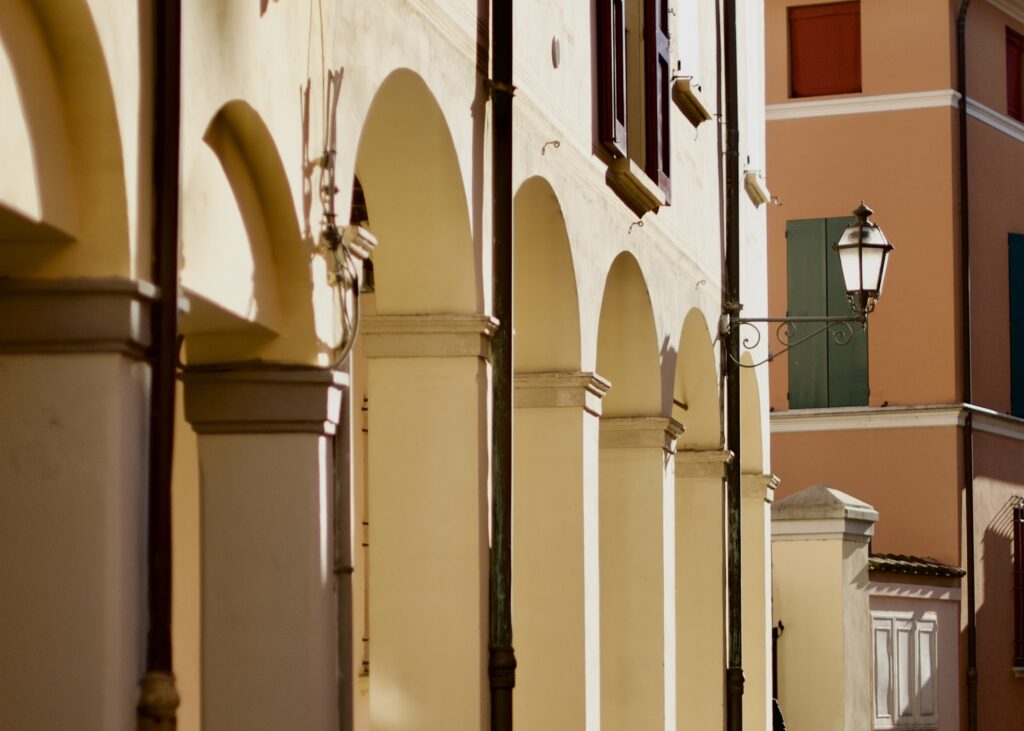
At the centre of the first enclosure stands the chapel, built by the municipal engineer Luigi Gamberini in the mid-19th century. It is designed in the Neoclassical style, with a large pediment and columns crowned with Ionic capitals. The portal bears the heraldic emblem featuring a peach tree, the coat of arms of San Giovanni in Persiceto. During the same period, the new entrance to the cemetery was also built, featuring an iron gate, and was widened to facilitate access for hearses. A second porticoed enclosure was added to this first one in 1855, due to the numerous deaths caused by the cholera epidemic, whilst it was not until the 20th century that the cemetery was extended southwards with new arcades, also occupying the inner courtyards with elegant niches and family tombs.
The first two courtyards are home to some of the most notable monumental tombs and house illustrious historical figures, both local and national, such as the historian of religions Raffaele Pettazzoni, Giuseppe Fanin, the trade unionist killed in an ambush in 1948, for whom a process of beatification has been initiated, and Giuseppe Gherardo Forni, a doctor and rector of the University of Bologna from 1956 to 1962. His sarcophagus, in the classical style, rests on a paving that mimics Roman cobblestones. A remarkable story is linked to the tomb of the musician Enrico Barbi, commissioned by his daughter Alice, a well-known singer, musician and composer who performed in numerous theatres and courts across Europe. Alice’s daughter, Alexandra, went on to marry Giuseppe Tomasi di Lampedusa, author of *The Leopard*.
In the long portico of the first courtyard, a number of marble busts of men and women catch the eye, including that of the merchant Nicola Masina, created in 1896 by the famous Bolognese artist Giuseppe Romagnoli; that of Mauro Forni, the hospital administrator; and that of Vilelma Chierici, who, after emigrating to Argentina, wished to return permanently to her homeland. In the right-hand colonnade are other notable tombs: Serafino Sacenti, with marble portraits of his entire family created in the late nineteenth century by the Venturi firm, renowned marble craftsmen from Persiceto who left countless examples of their craftsmanship in the Certosa di Bologna and in many churches and palaces, not only within our local area. Francesco Savorini, a producer of liqueurs known and exported all over the world.
From the early 20th century onwards, we see a shift in taste from Verismo to Art Nouveau; the graves are adorned with marble and wrought-iron decorations of great value. Among the sculptors commissioned to give form to these memorials, Pasquale Rizzoli (portrait of Nicola Masina), Alfonso Borghesani (the Gardini Chapel, the Zecchi burial niche) and Pietro Veronesi (the Cocchi Veronesi burial niche) are particularly noteworthy. As you stroll through the cemetery, you can admire flowers, angels, funerary symbols and mosaics which lend an air of greater opulence compared to the older enclosures, bearing witness to the social as well as artistic change represented by the wealthy bourgeoisie of the time. Designed to highlight the contribution of Persiceta’s citizens to the various war campaigns, the collective monuments are simple, unadorned, yet significant as memorials: The Veterans of the Patriotic Battles, The Fallen of the Great War and the monument to the Partisans, prefaced by the quote from Dante: “libertà va cercando, ch’è sì cara” (seeking freedom, which is so dear).
Circonvallazione Vittorio Veneto, 21, 40017 San Giovanni in Persiceto, Bologna
🕙Winter:
07:30 – 17:30
🕙Summer:
07:30 – 19:30
A twenty-five-minute train journey from Bologna, eight kilometres from the Bologna-Modena motorway junction, on the Italian section of EuroVelo 7 for those arriving by bike.
San Giovanni in Persiceto station, Bologna–Verona line. Trains run every 30 minutes from Bologna Centrale; the journey takes 25 minutes.
A14 motorway, take the Borgo Panigale or Modena Nord exit, then the SS568. Free car parks near the city centre.
On the Ciclovia del Sole (EuroVelo 7), 25 kilometres from Bologna along the cycle path on the former railway line.
Save the attractions, plan your route, and follow the Cultural Metro lines.